


There is a pot of lentils on my stove right now. Yellow lentils, cumin bloomed in olive oil first, turmeric turning the whole thing brighter than it started, a squeeze of lemon at the end. I make it on the fly...no recipe, no measuring, just the feel of it. Millie will definitely NOT eat it because she only eats 5 things these days…white rice, cheese quesadillas, butter pasta, McDonald’s Chicken Nuggets (don’t even get me started…), and my one parenting win…a snack plate of veggie crudites and fruit. She won’t try it this time…but I’ll keep making it and keep offering until she does one day, and even though she didn’t ask, I’ll tell her anyway: there are B vitamins in there and iron and protein and spice compounds that our brains can make magic with even when we have no idea. It sends our body the signals that we’re safe, there’s no emergency to brace ourselves for, there’s food, and it’s warm, and you can let go of whatever you’re carrying from the day.
I wonder sometimes who first figured this out about lentils…or foods that nourish in this way? Who was the first woman to bloom cumin and coriander before anything else and notice that it changed something...in the food, in the room, in the people sitting down to eat it? She didn’t study or go to a prestigious culinary school. She had her hands, and she had people she was charged with nourishing, and she paid attention.
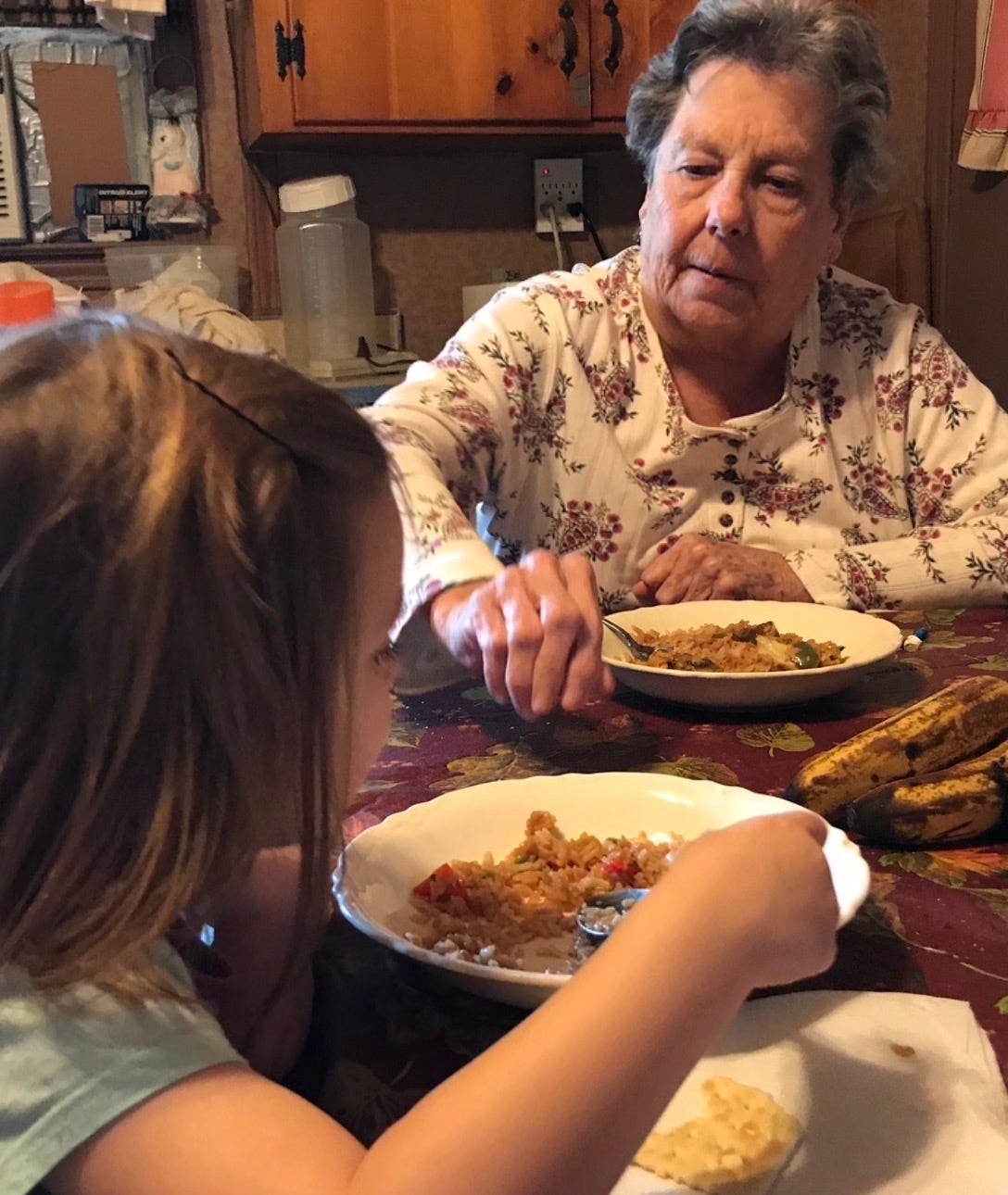
Before anyone called it nervous system regulation, before the supplements and the breathwork and somatic exercises and the $15 matcha…before all of that, there were kitchens…there were slow pots…fermented things in jars on a shelf, and there were women. Women who knew, without any research or knowledge behind the why…they just KNEW what it took to keep a body steady…what it took to keep a family standing when everything outside the door was trying to knock them down.
It’s no coincidence that our ancestors all knew the same thing…they knew how to keep a body regulated for the day, for the season, for a lifetime. The pot and the spices looked different in each place, but the answer was always the same: feed people…something warm, something that sticks to their bones, that gives them life…feed them together…don’t rush it, and always enough.
I wrote about my Nanny Sis a while ago in The Long Goodbye. I shared our experience with dementia and what it’s taken and how it feels to actively grieve and lose someone slowly while they’re still here. The grief and the goodbye are still happening, especially after she’s taken some falls and her health declines even more rapidly. I hope I can still see her next weekend when we travel south, maybe my last time saying goodbye…but, who knows…maybe not. But as I think about her and about legacy, I think about what she held in her hands before dementia started pulling at the threads of her mind.
My Nanny Sis would spend an entire Sunday with a pot of something on a low flame and make it seem like there was nowhere else in the world she needed to be…well, except for church first thing…that was a must, and then she would come back to whatever she was simmering on the stove. She cooked stewed tomatoes and rice...low and slow, her handmade biscuits that would bring any passersby in as her kitchen had the whole of Ridgeway, SC, smelling like something patient and good and real. Black-eyed peas and collard greens on New Year’s Day because we all needed the warmth, the good fortune, and the luck…and because the women before her did the same…and their mothers before that. Grits and eggs because they were there, they were cheap, and they were grounding…and the table on a Sunday was a weekly reset for us all…whether we called it that or not.
The pot likker from those collard greens held iron, magnesium, and folate concentrated into liquid. The black-eyed peas were B vitamins, prebiotic fiber, and protein in a bowl. My Nanny didn’t have this scientific understanding and certainly wasn’t reading books on nervous system regulation…she was reading the room. Nanny Sis read the people in her home, at her table, and she understood, without a single clinical word for it, what it took to feed them and make them steadier than they arrived.
Over the past 2 years, I’ve had the honor of getting to know and explore the Bengali kitchens and culture of Yas’ family. I immediately recognized the warmth, the love, and the care…the communal shape of their meals, especially as his Babus and Mamis drop off containers of biryani, chicken roast, and dal to our apartment. His family FEEDS…and they know what we need without us even saying a word. Dal appears almost at every meal as lentils are the spine, the constant underneath everything else. Turmeric, cumin, coriander, ginger...warming spices that I’ve come to learn that beyond their transformative flavors, also have anti-inflammatory and neuroprotective properties. Researchers have literally spent decades studying these powers, and the wellness industry has tried to bottle and sell back to us at premium prices. These flavors, these grains were simmering in pots long before anyone wrote a paper about them, because the women in those ancestral kitchens understood something the research is only just now catching up to: that warmth has a physiological effect, the spices have an anti-inflammatory impact, and those shared meals eaten loud and together…they do something no supplement can replicate.
The Bengali table…the southern table…your grandmother’s table…they are all communal in a way that is physical, spiritual even, a way that resonates deep within our bones. You eat together, loudly, at a table that expands when it needs to…not alone at the counter at 10pm picking at whatever’s closest. The communal table isn’t an aesthetic choice; it’s a biological one. Our vagus nerve activates in the presence of other bodies, other warmth…and the slowing down that happens when eating becomes a shared event instead of a solo refueling stop.
The slow-kitchen has always been a place where I’ve learned the most valuable lessons. When I worked in the restaurant, it was FAST…yes…fast and chaotic and such a beautiful mess, but I loved every second of it. I especially loved the early prep times…before the people filled the seats, before the dinner ticket ding on the expo screen became the soundtrack of the night. The prep shift in the early morning was when I was able to learn, hold, and explore the produce and the prep for service. This was when the slow-cooking mattered…there were menu items that demanded multiple hours in the low oven…the ossobuco needed to be tender and soak up the best of the season’s roots and vegetables nestled around it. The half chicken longed for the hours over a bed of onions and wine while they softened it from below. The lamb shanks asked ever so politely for a braising broth so tender, so aromatic…so it could stretch itself away from the bone without quite letting go.
I started my professional kitchen career cooking in this Mediterranean tradition, and I love looking back at the common thread that’s been woven through every single kitchen that I’ve since been a part of. I think about what each of those kitchens taught me…what my chefs taught me...the art of choosing the freshest, seasonal produce, the act of doing very little to it to highlight its natural beauty, or even the slow braise, the long cook, the confidence in my own hands to prepare exactly what my body needs to be nourished…the patience necessary for the breaking down before anything can open up and become what it was always meant to be….all of it was nervous system education in disguise. You can’t rush a braise; the waiting is part of it, and while you wait, something shifts and settles within.
The restaurant was my Mediterranean classroom at a time when my life seemed to be falling apart around me. Those were the years I was pulling away from home, from the life I knew, becoming a chef whose ambition would eventually cost Millie her sense of safety.
All at the same time, ironically, this time was painful and hard and SO fulfilling and SO special and SO necessary. This was my classroom, and these slow-cooked meals reminded me that with a little heat, a little cuddle from the season’s vegetables and even a little wine to take the edge off…I, too, could grow…stretched, softened and tender.
Nanny Sis never sat down to pass on this knowledge to me, and she surely can’t tell me any of this now. But thankfully, I watched her from a young age, and even into adulthood, I watched what she had in her hands. The passed-down knowledge was in the muscle memory of those slow Sunday afternoons, in the low flame she kept the stewed tomatoes on, in every table she set in Ridgeway, SC. Dementia has taken her words, her voice, the thread pulled almost bare…and what’s left is someone I love who can’t hand it forward the way she would have wanted to…the way we needed her to.
When I talk to her, these days, or look in her eyes, I mostly see a blankness, a lost mind fighting to remember anything at all…and then, sometimes, I catch it…a fleeting moment, but I still manage to catch it…the moment recognition floods her beautiful blue-gray eyes and she actually sees me and knows who I am. In those moments, I try to ask her something…quickly…from her past, about her biscuits or her notorious Christmas candies, whatever I can gather from her wisdom, any missing pieces from the puzzle that I know she still has in there, deep within her, before they fly away again into the blankness.
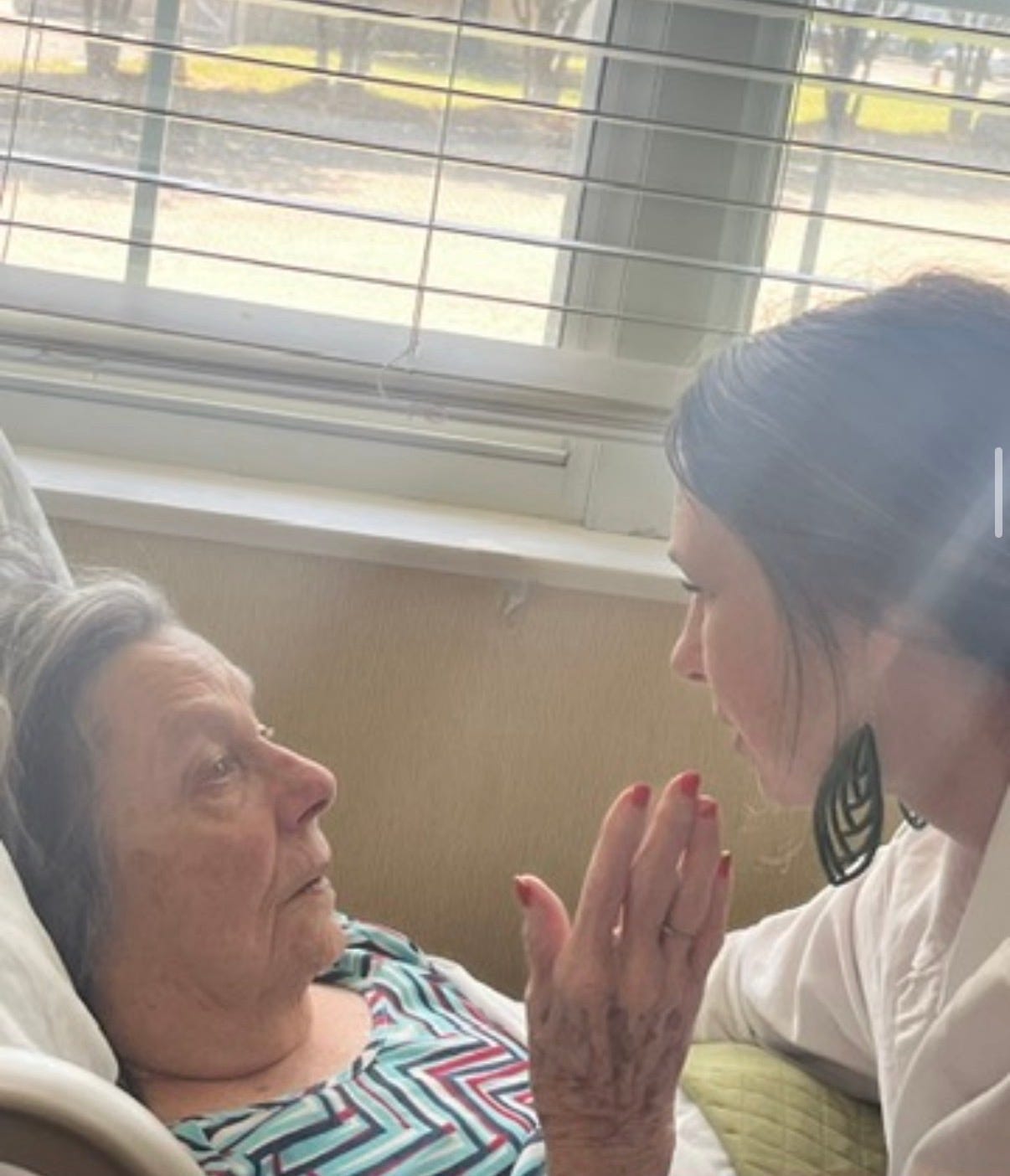
None of us is promised more time, or another day. Our ancestors, the ones who knew but didn’t always have time to say it out loud…they knew that the best, surefire way to calm a restless heart was a warm, slow-cooked pot of goodness. And like my Nanny did before her mind was slowly robbed from her, we probably all assumed there would be more Sundays, more slow pots, more years at the table before the thread started to unravel.
There’s a saying most of you know already...give a (wo)man a fish, and you feed them for a day, teach a (wo)man to fish, and you feed them for a lifetime. I think it stops a little too short… because to go further with it…TEACH a (wo)man HOW TO COOK that fish...and you feed more than just her stomach for a lifetime. You feed her nervous system…you feed her confidence and ability to provide…you feed the part of her that knows she is capable of giving her own body what it needs…and you feed the people who pull a chair up to her table.
There’s something that happens when a meal comes from your own hands...from real things...made with patience and knowledge that were passed into your own hands from someone else’s. Something the finished plate can’t fully explain on its own…the act of cumin blooming until it pops in the oil, or onions low and slow until they almost disappear into themselves, the pot that asks you to wait because it isn’t done yet...it all tells your body that you are capable, that there is enough, that your hands know things your mind might have forgotten. That meal lands somewhere deeper than nutrition can reach.
I’m sure she wished she had more time to pass along the things she knew, the things her mother taught her, and beyond…I know I do. And so now, I’m writing this shit down…the things I’m learning, the things I’ve learned from this roller coaster of a life and the things I’ve learned from the women around me, from their kitchens, from their hands…and I’m passing it down to Millie, so she’ll know before I, too, am gone one day. None of us is promised more time.
Millie is 11, and we are in the thick of all the pre-teen things…the manic hormonal shifts, the body changes, the attitude. And, I want to make sure I do everything I can possibly do to support her, love her, and share with her what I’ve learned to hopefully lighten her load. Isn’t that what we all try to do as parents? We can get so caught up in “righting the wrongs” of our own childhoods that sometimes, we lose sight of the fact that our children are their own person, with their own struggles and their own challenges. She’s got enough on her plate to deal with without the added pressures of dealing with my childhood shit as well.
I mean, if I’m being honest, most of her “plate” of issues were gifted to her by her dad and me as she took on the collateral damage of our separation, divorce, and the severing of all the things Millie held to be important…to be safe. I wish I could wax poetic about how Millie and I spend so much time cooking together in the kitchen…but that would be a lie. At this point, Millie resents my cooking and my time in the kitchen…part of her blames the kitchen and my becoming a chef for tearing apart the family she knew and loved. Maybe…hopefully…she will come back around to joining me in the kitchen, and maybe…just maybe, she will start to understand and recognize the redemption I have found in this place. Maybe she will experience her own awakening in the kitchen, as I did. She won’t join me there quite yet…but I’ll keep inviting her to, anyway.
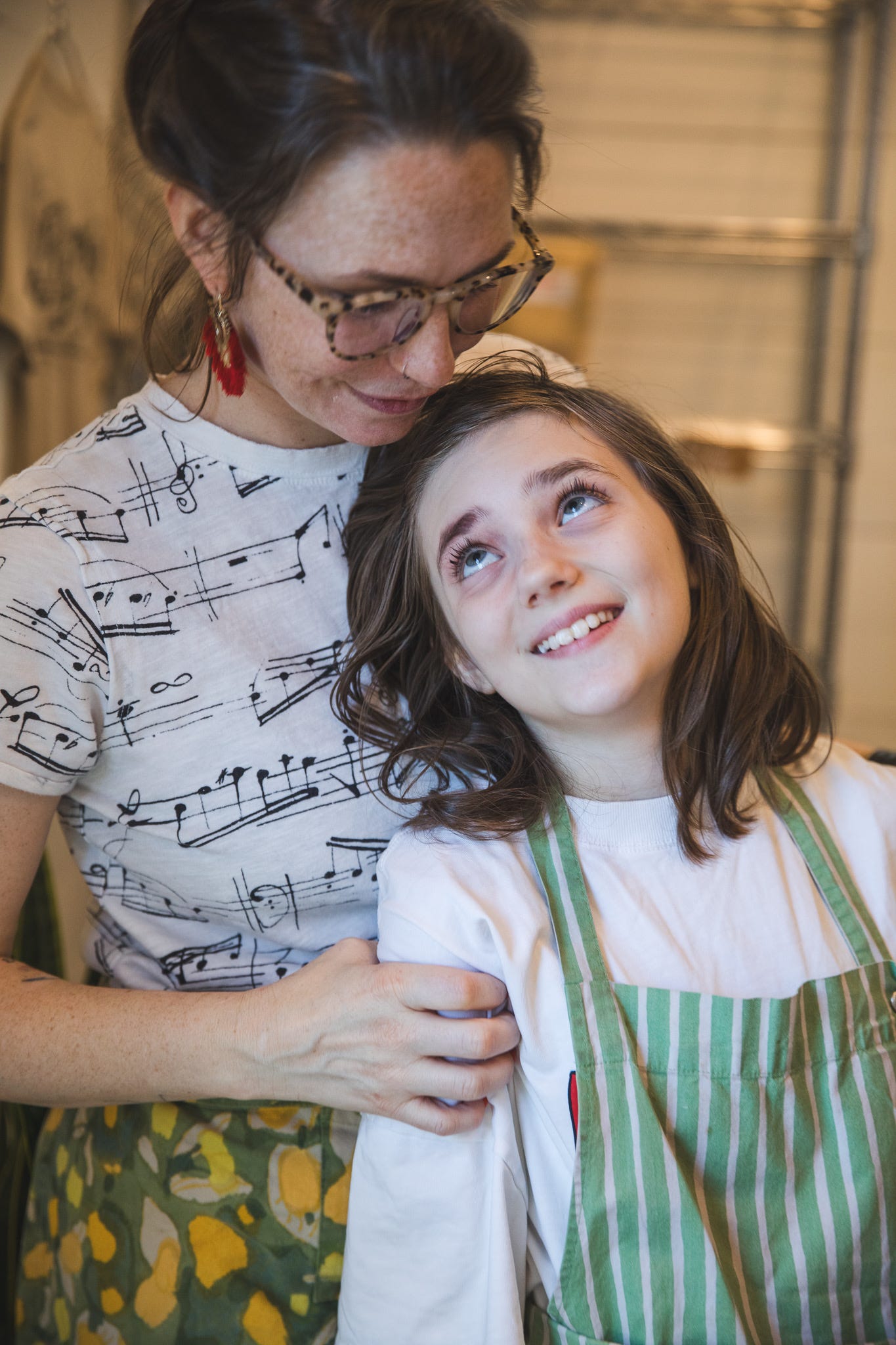
What changes when we can pass down actual language instead? To be able to give them the understanding that cravings aren’t malfunctions, that appetites aren’t something to minimize or manage, that our body isn’t the enemy that needs to be disciplined into compliance...to guide them to listen to their bodies and listen to what information their nervous systems are sending out?
What changes when a girl goes through puberty, knowing that what her body is doing has a name and a reason and a list of foods that can help and heal? When Millie’s 23 and depleted, will she remember and actually reach for something warm from the pantry instead of white-knuckling through that shitty feeling? Will she remember the bowl of lentils and the pot of rice, and know…like Nanny Sis knew and like my mom knew and like I know…will she know that her own hands can make those things and heal her own body…one bowl at a time?
This is what I’m working towards…I want to pass on the thrill of knowing how to make what your body is asking for…no recipe…no guide…just the muscle memory passed down from our mothers, grandmothers, and those gone before. I don’t know all the research and the science behind it all, but I’m learning and trying to combine that knowledge with what I already know in my body and in my own hands. The knowing and feeling what food does in my body beyond calories and weight, and the general ambient message that less is better. I’ll keep making the lentils. I’ll keep telling her what’s in them, even when she won’t eat them. One day she will…and she’ll know why it matters before she ever needs to.
I just love your writing and how you’re able to capture all the emotion that goes into food!
Such beautiful writing and nostalgia. We lost both my grandmother and great-grandmother to dementia so I certainly feel your words.