


Every Thursday, I'm setting the table for your weekend…a little collection of reads, recipes, fun things, and whatever else caught my eye this week. It's the moment before the chaos when you get to decide what kind of experience you want. NOT a to-do list…just really sweet possibilities.
Yas and I have been sake people for a while now.
Ever since we first started dating back in 2024, it’s been one of those subjects we don’t stop talking about. Over time, it’s definitely become our libation of choice, something we get genuinely excited about when a new bottle shows up on a menu or in our fridge.
We’ve gone to sake tastings and sake-paired dinners with my friends at MTC Sake & Kru over in Brooklyn, and those events only deepened our love of it as we sit elbow to elbow with Sake Masters, purveyors, and enthusiasts…swapping stories about the craft, the skill, and our collective excitement around sake. When I worked in the restaurant, I even got to attend a VIP day at the Japanese Food & Restaurant Expo with MTC. I spent a whole day tasting and learning all the nuances and depth of sake, shochu, and more.
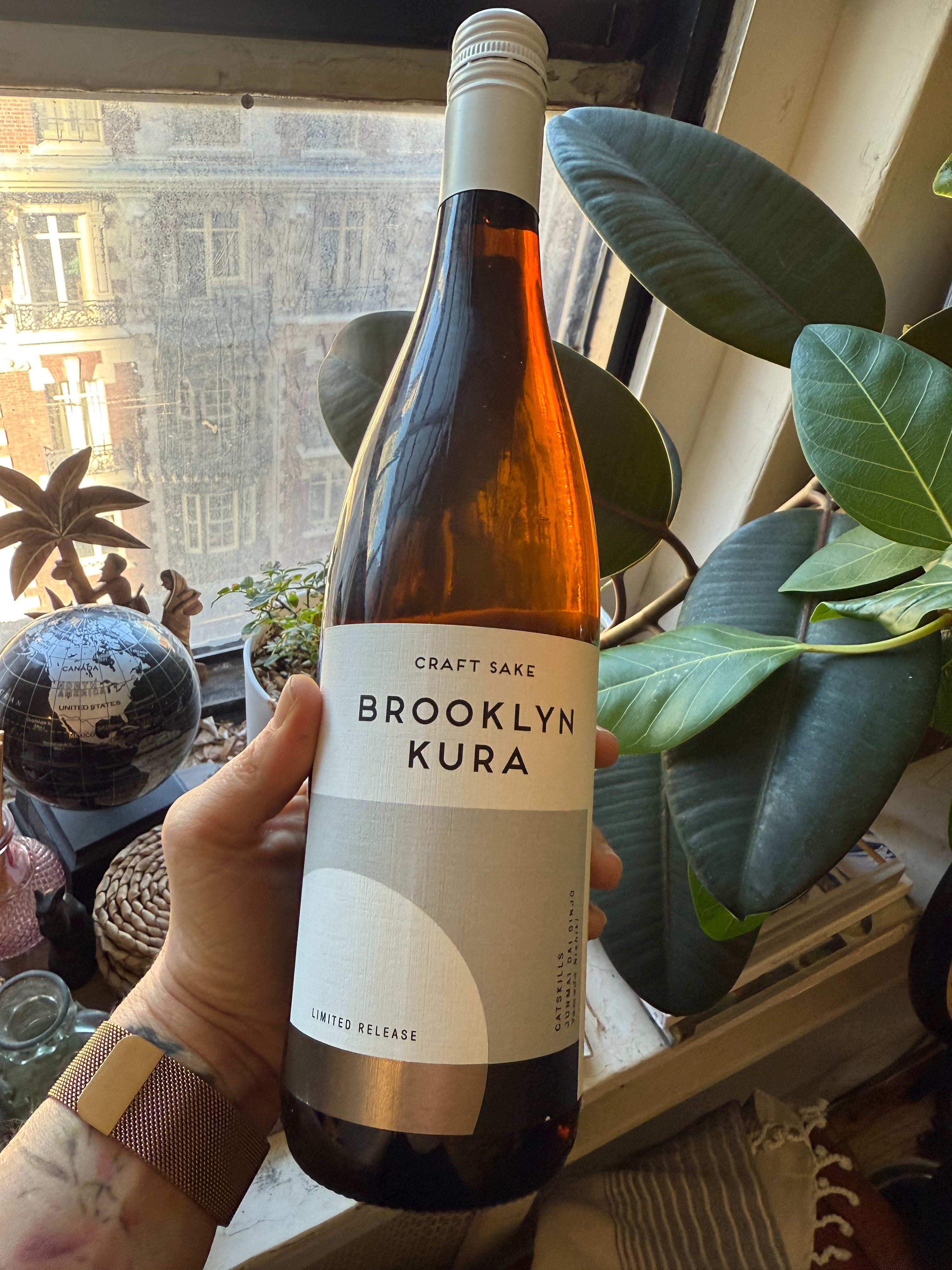
Last fall, it was no surprise to our friends and family that our wedding signature cocktail was a custom Apple Cider Sake Sangria situation. Since then, we’ve become Kura Kin members with Brooklyn Kura (our favorite brewery in Industry City that’s been making sake in New York since 2018), and now, a box of their limited releases shows up at our apartment on a rhythm that gives us a jolt of new life each time it arrives. Our newest shipment just got here in the beginning of April, and dang, if we didn’t feel such a rush of anticipation as we cracked open those bottles…it actually made me want to finally sit down and write a little ode to sake.
So this week, the whole table’s about just that…my little love note to all things sake. Pull up a chair, pull out your tiny glass & dive in.

THE GRAZING PLATE
(quick bites, short reads, things to nibble on)
Kura Shochu Cocktail Competition at Rule of Thirds, Sunday, April 26, 6 PM: Brooklyn Kura’s distilled-spirit side gets its moment: bartenders around the city competing for best Kura Shochu cocktail at one of the best izakayas in Greenpoint. Shochu is its own animal…distilled rather than brewed…and absolutely worth knowing if sake is what pulled you in.
The Joy of Sake NYC, Thursday, April 30: The world’s largest sake tasting outside Japan returns to Metropolitan Pavilion with 492 competition-level bottles and sake- inspired bites from restaurants including Bond St, Sakagura, and Hirohisa. If you want a crash course in what sake can be, this is the room. Tickets are $140 and include unlimited pours and food.
Sake & Cheese at Murray’s, Friday, May 15: The pairing that keeps converting wine people. Co-taught cheese pros and sake experts, this is a deep dive into selections from Murray’s cheese case that have been beautifully paired with five Brooklyn Kura sakes. It’s a one-of-a-kind tasting event made for food lovers who want to think beyond wine with their cheese. *more on this below
The Global "SIP" Shift: Here is a wild nibble for you…Did you know that North America now accounts for 28% of global sake consumption?! We aren't just "trying" it anymore; we're officially the second-largest market outside of Asia, and premium craft varieties make up nearly 38% of all new product launches.

THE UTENSILS
(tools, recipes or things that help you do the work)
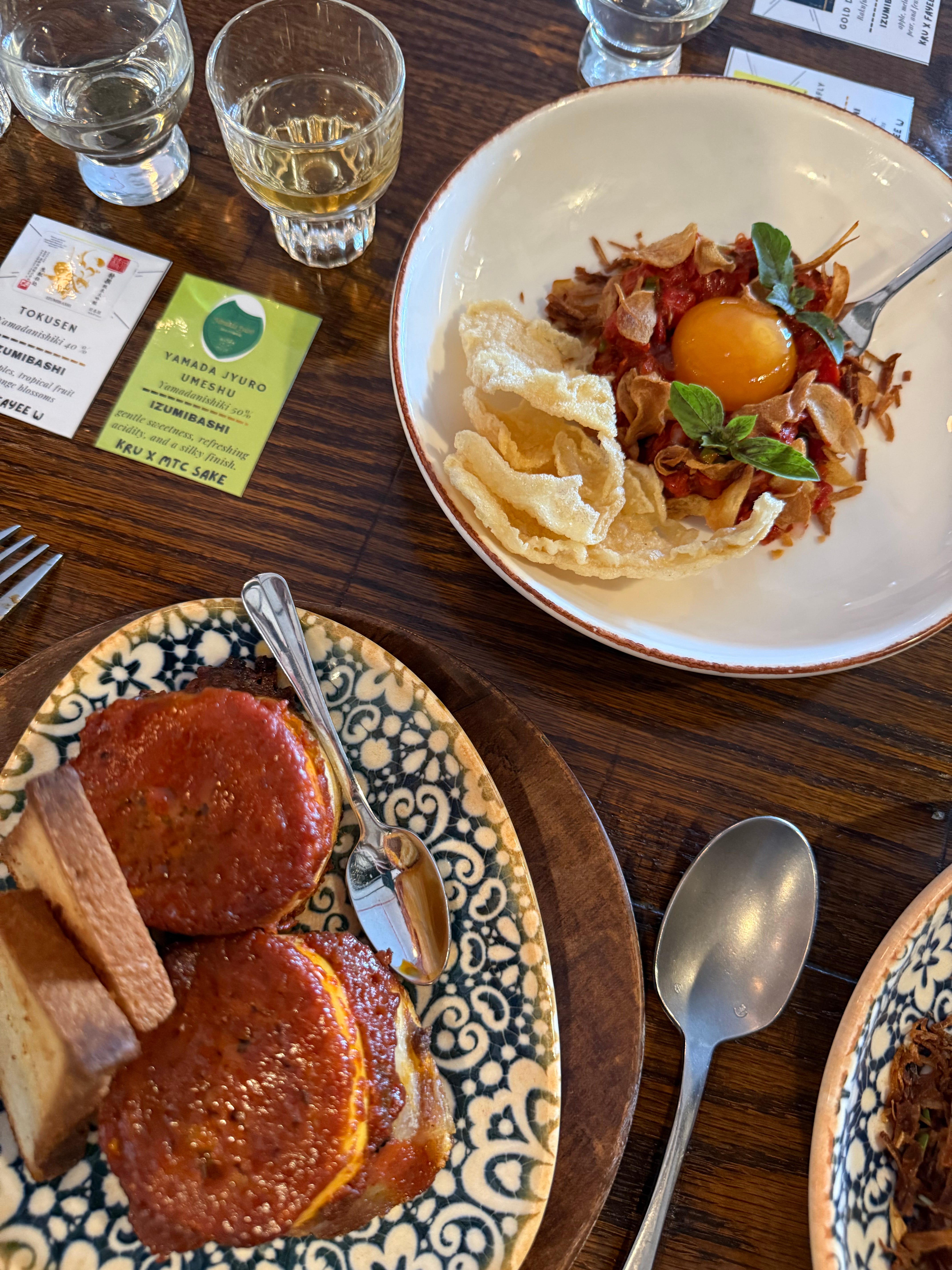
As I spent the past 2 years diving into the history and legacy of sake, I came across this beautiful Japanese proverb that really transformed how I think about sake and food pairings…
nihonshu wa ryori wo erabanai
…most often translated as “sake doesn’t fight with food,” though the more accurate read is that sake isn’t fussy about food.
That sentiment has really opened my eyes (& my kitchen) to seeing just how beautifully sake pairs with different varieties of food and cuisines...way beyond the traditional pairing of Asian cuisine.
Sake has about a fifth of the acidity of wine, no tannins, and a naturally high umami content, which is why it handles so particularly well with ingredients ranging from cheese, eggs, asparagus, artichokes, bitter greens, caviar…even grits (heyoooo!).
The magic of pairing sake with food is to match weight to weight. Crisp honjozo with lighter dishes, something like a kimoto or yamahai or aged junmai... richer, rounder, higher in umami...for heavier or fattier foods. In my own kitchen, it might look like a dry ginjo with fried green tomatoes, a kimoto with collards that have been melting into themselves for the better part of an afternoon, or even a dry-hopped sake with fried catfish cooked in some real fat.
Yas and I are both so freakin’ excited about sake and truly love talking to anyone and everyone about it, especially when it comes to pairing sake with different food varieties…and definitely with those who haven’t tried yet or haven’t even considered it outside of the world of Asian cuisine.
In all my pairing experiments so far, I’ve figured out something really special…a beautiful translation and connection between the rich Japanese craft of sake with the soulful, communal history of the South…and hell yes, they all make sense…incredible sense, really.

THE VESSELS
(what holds us, what gives our chaos shape and space)
I’ve got two deep dives, two stories to share with you this week: the Brooklyn Kura origin story, and the larger American craft sake story that it sits inside.
Brooklyn Kura: Brian Polen and Brandon Doughan met at a friend’s wedding in Tokyo in 2013…spent a week touring breweries together and then started homebrewing soon after…Brian worked with a $120 chest freezer in his Brooklyn apartment, and Brandon worked from a Portland basement.
Brandon, who had twenty years of beer homebrewing behind him, eventually quit his job as a biochemist at the Knight Cardiovascular Institute to become head brewer. Fourteen recipe iterations later, they had their flagship, a junmai ginjo they named Number Fourteen, and in 2018, they opened Brooklyn Kura as the first sake brewery in New York State.
Seven years after that, last year in March 2025, Brooklyn Kura became the first American craft sake brewery to export back to Japan, through a partnership with Hakkaisan, a Niigata brewery that’s been making sake since 1922. It was a huge accomplishment. They aren’t just making sake; Brooklyn Kura is leading in a North American market that is projected to grow to $2.37 billion by 2034.
Sake consumption in Japan has actually been declining for decades, while global demand elsewhere is climbing. There are now roughly 30 emerging sake breweries in the U.S. today, more than any other country outside Japan.
Beyond the bottles, BK also launched its Sake Studies Center. It’s the only sake school in the country attached to a working brewery, run by Sake Samurai Timothy Sullivan (um…what a badass title?!). The Center offers weekly intro tastings all the way up to the two-day Advanced Sake Studies Certification for hospitality pros. Totally on my wish list for this year!The other read I wanted to share for a little more perspective is this National Geographic feature on the American craft sake boom…it zooms out from Brooklyn to Oregon to Arkansas to the Hudson Valley. It’s a great place to start and see where this whole movement is headed.

THE GLASSWARE
(the bubbles, the refreshment, what quenches)
Three Brooklyn Kura bottles to know, in the order I’d introduce them to someone new to sake:
Number Fourteen (Junmai Ginjo Nama) — the flagship. A blend of Yamada Nishiki and Calrose, light-bodied, soft floral and apple on the nose, notes of tropical fruit. Start here.
Grand Prairie (Junmai Ginjo) — the one I can’t stop thinking about. 100% Arkansas-grown Yamada Nishiki, fermented slow and cold, dry and restrained, with a honeysuckle hint. It pairs beautifully with scallop crudo, crab cake, tuna tartare. More on this one below.
Occidental (Dry-Hopped Junmai) — a junmai infused with dry hops that gives it grapefruit zest on the nose, a citrus-rind finish, and a rose hue the longer it sits in the bottle. The one I’d pour for anyone who has ever told me they don’t like sake.

THE NAPKIN
(for wiping away the week’s mess, the reset)
The permission slip this week is that proverb again:
sake isn’t fussy about food.
If you’ve been standing in the wine aisle on a Tuesday night trying to decide whether a Chenin or a light red “goes” with whatever you’re making…put the bottle down, walk a couple aisles over, and pick up a junmai. Sake’s whole posture at the table is to let the food be what it is.

THE DESSERT PLATE
(the sweet stuff, pure joy, no justification needed)
The “Grand Prairie” sake is named for a region in central Arkansas where the Isbell family became the first Americans to successfully grow Yamada Nishiki, the gold standard for sake rice.
Arkansas isn’t just a “rice state”…it’s the powerhouse. As of 2026, Arkansas holds a staggering 53% of all rough rice stocks in the US. For this heritage grain to grow in Arkansas soil, then be fermented in Brooklyn, and now cross back over to be featured in Japanese bars is pretty dang remarkable.
Oh, and the tasting notes include honeysuckle…so naturally, for this Southern girl, it’s about as downright familiar as it gets. I am SO excited to keep exploring, keep tasting and to keep experimenting.
Thinking About This Week…
What does it mean to build something new from a tradition that isn’t yours, carefully, in partnership with the people whose tradition it is?
I believe if there’s a commitment and a dedication of respect and honor throughout the process and the evolution of the craft, no matter where it is or who is crafting it, it can be one of the greatest acts of celebration, kindness, and appreciation there is.
Bottoms Up!
xo, Jess
Yummmm! I have a lot to learn about Sake!
Brookly Kura! So good