


I’ve walked into kitchens that are absolutely pristine, new...organized beautifully, everything in its place, enough room to move freely. And I LOVE good organization, genuinely...and cleanliness next to godliness and all of that. But I’ve also watched the people moving through those spaces…people who seem lifeless, with no feeling, no presence, no heart, only clocked in long enough to do a job and then leave as soon as their time is up. All that space, all that order, and no heartbeat.
On the flip side (especially in NYC), I’ve seen kitchens that are about five feet long and two feet wide. Everything stacked…floor to ceiling…because they had to work with what they had. One cook, one chef, a lot of invading each other’s space, and none of it mattered because there was an absolute JOY plastered on their faces and sweating off their foreheads. A making-the-best-with-what-we’ve-got energy filled the room in a way all that square footage never could. A smile that wasn’t just on their face, but in their eyes, too. There was a knowing permeating that tiny space...they truly loved being there, loved what they were doing, and they understood, even if nobody was saying it out loud...they were an integral part of the experience, giving life to the people on the other side of the glass...the wall...the pass.
On the surface, those spaces may not look like much or may look like chaos, but underneath…the bones…the bones were good.
It has good bones.
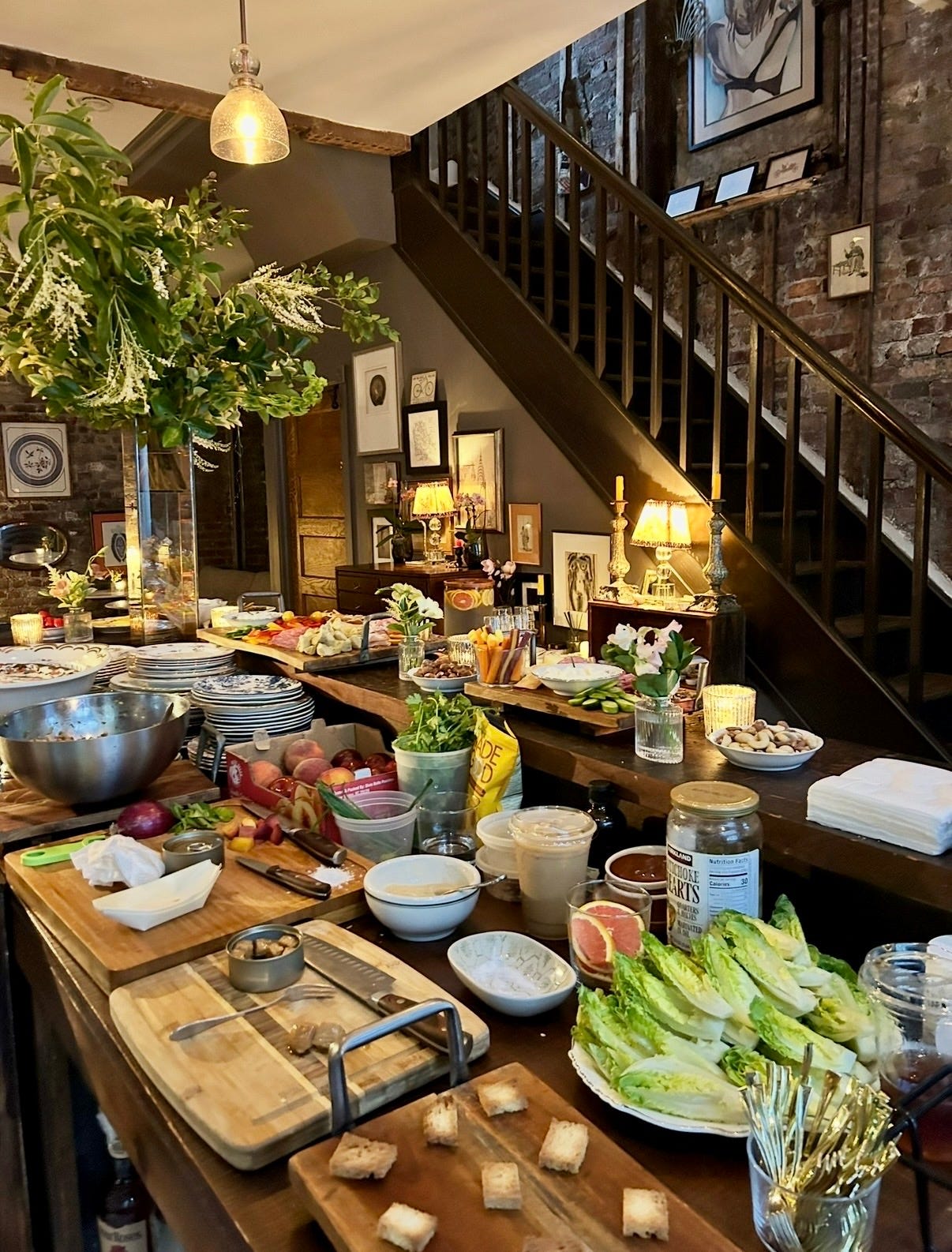
We say it about houses, we say it about faces, we say it about the neighborhoods everyone writes off, but others see their potential. We say it, too, about the company that looks like a mess from outside, but their people have been there 15 years and still talk about the work like it truly matters. It’s a phrase that everyone just understands.
It means that what’s on the surface isn’t what really counts...the surface can be a mask, it can be fixed, renovated, rebranded, regrammed. But the bones? When something has good bones, it means there’s something underneath worth building on.
The concept of good bones has been running on a loop in my mind, in my plans, even in my therapy sessions lately, so I decided to go a little deeper.
Houston, we might have a hospitality problem.
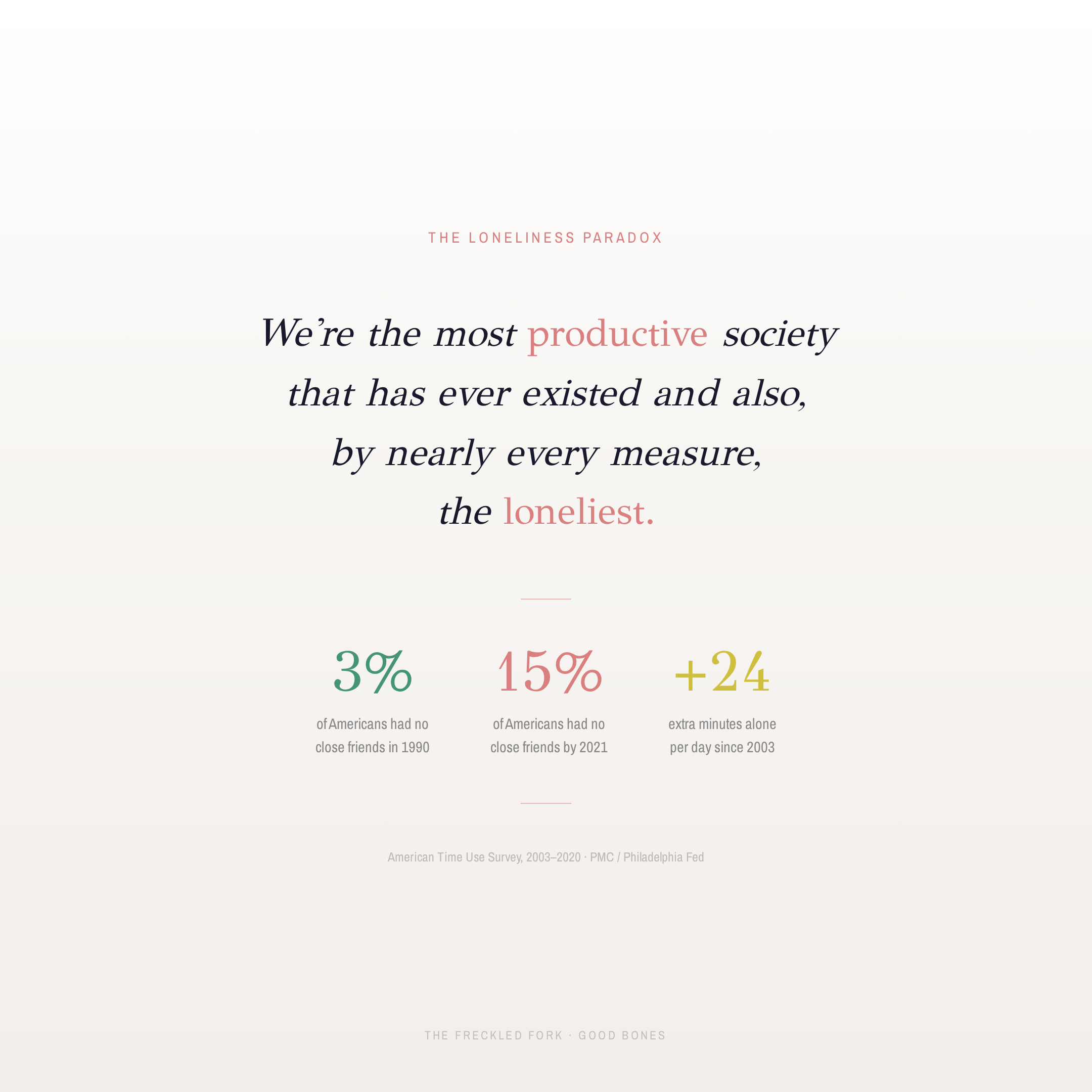
In 1990, 3% of Americans reported having no close friends. By 2021, that number had risen to 15%...a fivefold increase over thirty years. Did people get less likable? Maybe. Did we get more divided because of politics? Money? Social issues? Probably. But maybe at its core, it’s because we’ve actually been building a world that makes it increasingly harder to really know each other. Derek Thompson called this the Anti-Social Century, and the numbers back it up.
Since 2003...before smartphones, before the algorithm, before any of it fully took hold...the average American started spending an extra 24 minutes a day alone…that’s 12 more hours a month. By 2019, time spent with friends had dropped from more than 6 hours a week to less than 4. We didn’t lose each other all at once...we’ve been losing each other in increments while we were too busy trying to perfect everything else. And underneath all that isolation, all that division, strangers have become a liability...they’ve become some THING to manage or contain instead of some ONE to welcome.
We’ve replaced presence with process, connection with content strategy, and basic care with white-washed customer service. And in ALL that polishing, we’ve lost the actual thing we were supposed to be building. And, honestly, the hustle…the pursuit…made it worse.
We’re the most productive society that has ever existed, and also, by nearly every measure, the loneliest.
We’ve turned hospitality into performance. Into a vibe…and vibes are not bones.
What’s strange is that this isn’t new…every civilization had some form of hospitality built into its moral foundation...as a fundamental, woven into the fabric of how people lived. The ancient Greeks had a name for it: xenia… and it was law and a theology, all at once. Zeus himself walked the roads in disguise to test which doors would open. And, the part of the Greek hospitality ritual that my heart beats for...before a host could ask a stranger their name or where they’d come from, they were required to first offer them a bath, a meal, and some rest.
You were cared for before you had to explain yourself.
Even the poorest homes had a xenona...a room set aside entirely for receiving strangers.
A room, set aside, for the stranger who hadn’t arrived yet.
We haven’t evolved past this need or the importance of it…we’ve just convinced ourselves that it’s not safe, it’s not necessary anymore, or not important enough. Instead, we’ve built an entire economy around the performance of the thing we used to have so fundamentally…a foundational value that we’ve quietly lost.
What bones are actually made of
Bones on the brain…and I’ve been wondering, what is bone actually made of? Not just in a metaphorical, poetic sense, but the literal bone. If I’m to figure out why the bones are so important, maybe I first start with the science of it all.
Bone is roughly 60–70% mineral, a calcium phosphate crystal called hydroxyapatite, and about 30% organic material that is mostly collagen. There’s water threaded through all of it, too.
Neither component can work alone.
Collagen without minerals is rubbery with no capacity to carry weight.
Mineral without collagen is rigid, past brittle, and shatters on impact.
But woven together in precise proportion, they make something that can carry an enormous load without fracturing.
The mineral gives hardness.
The collagen gives flex.
They are each other’s completion.
(I told my therapist this, and she just looked at me like...yeah, Jess, that’s also how relationships work, too…I know…I know.)
Bone also isn’t static...this is the part that got me.
It’s constantly rebuilding through three types of cells:
osteoblasts that build new bone…
osteoclasts that break down what’s old or damaged…
osteocytes, the long-lived cells embedded deep in the structure who direct the other two…
…sensing stress and signaling where to build and where to release. The bones you’re carrying right now are not the bones you had a decade ago. Same shape, same architecture...but entirely new.
Bone is perpetually becoming.
And there’s Wolff’s Law: bone remodels in response to what’s being loaded on it. The places you use grow denser and stronger; the places you protect or don’t use will grow thin and fragile. And then the marrow...invisible from outside, generating roughly 500 billion blood cells every single day. The most life-giving work in the entire body happens on the inside.
You become what you practice…the bones just make it literal.
The bones of hospitality
There’s been something building inside me for the past few months…as if I’ve been peeling back layers and layers…years and years of masks and things I “thought I knew”, and finding underneath everything…the true meaning of hospitality…in my heart, in my mind, and through my hands. A refinement and a reckoning…a realization of a growing philosophy…
Hospitality is the bones.
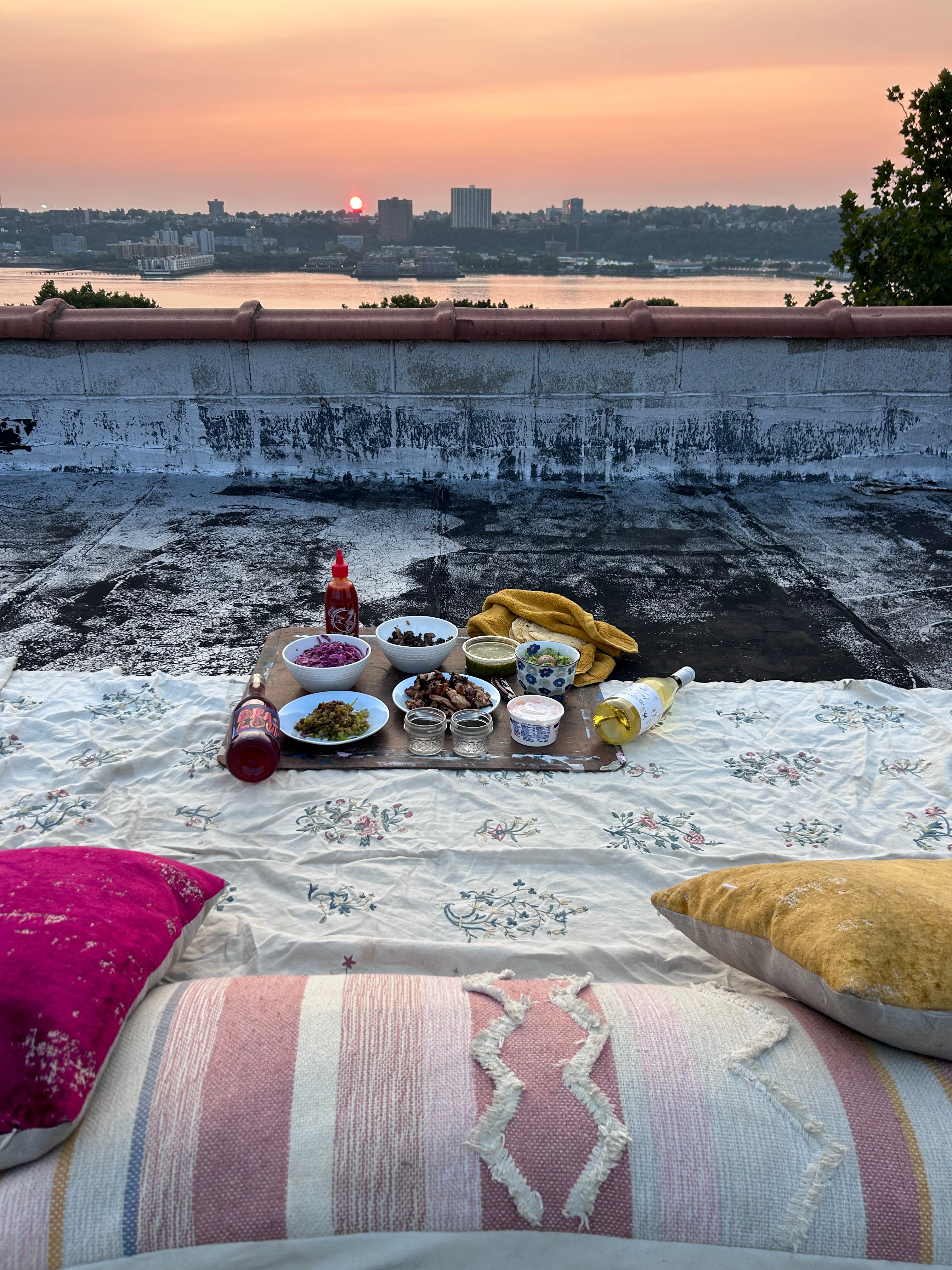
At home, true hospitality looks like having creamer in the fridge for guests when I only drink black coffee…or having gluten-free snacks on hand for my friend with Celiac, or sending Postmates breakfast to family in the South for their birthdays, or sweet treats for my best friend’s mom battling cancer. It’s the little gifts picked up for someone at random or texts to say “you’re on my mind,” or even the simplest act of making sure my people are fed every day. All this without expecting anything in return…because that’s true hospitality, taking care without expectation or without transaction.
In business, the offer, the aesthetic, the deck, the menu, the brand voice…they are all secondary to the bones, to the core. The bones are the weight-bearing architecture...what precedes everything and outlasts everything, what remains when the performance falls away.
And like actual bone, the bones of hospitality are two things that need each other: warmth and values...collagen and mineral. Warmth without values is formless, nothing to offer when real weight gets applied. Values without warmth are brittle and fracture the moment a real human being shows up with a real need. The organization built on only warmth collapses…and the one built solely on values shatters. But those who have both can carry anything.
I’ve been working through what those bones actually are. A real look into what holds things together when everything else falls away. What started as a list of 40 things I'd learned by that age (ahem...a couple years ago) has turned into something closer to a manifesto. It's not done yet, but here are two bones that are solidly on the list.
See the person
The first bone sounds almost embarrassingly simple: see the person.
See, value, and trust the human being who walked in, sat down, sent the email, booked the call, and is there with you…hoping, at some level, to be received. The whole human...before the ask, before the order, before the brief, before you’ve categorized them into a persona or a segment or a profile.
I’ve had conversations where the other person clearly has an agenda or zero space for a different perspective. I’ve watched a chef plate a technically perfect dish for a table, but never once made eye contact. I’ve been on the receiving end of both.
You can feel when you’re not being seen, and it doesn’t matter how good the product is.
The first act of real hospitality isn’t a gesture, it’s attention. It’s the practice of actually looking at what’s in front of you before you start performing your role in the exchange. It’s noticing the body language, the hesitation, the thing someone said, and then walked back…it’s the question underneath the question they actually asked.
Remember the xenona...that room set aside before the stranger arrived? That’s what seeing someone looks like in practice.
You were thinking about them before they got there.
You anticipated their presence instead of reacting to it. That’s the sequence we’ve inverted. We figure out what someone is worth to us before we’ve actually looked at them, or give them space to even arrive. And people can feel that shit. That feeling and knowing that your value or worth has already been measured and assessed before you even get to speak a fucking word. We all know that feeling.
The fastest way to lose someone is to make them feel unseen...and most people don’t even realize they do it.
Give freely, without transaction
The second one is the one that makes most people uncomfortable when it’s said, which usually means it might matter the most.
True hospitality is a one-way flow…given, not counted.
It’s beyond contracts, beyond what’s expected…with no running tally racking up in the background while you smile and do for others. This is what separates hospitality from entertainment. Entertainment is reciprocal...you perform, they respond, value exchanges hands. Hospitality is directional…you offer something of genuine value because the person in front of you is worth it.
That’s it.
Every tradition that has hospitality at its center operates this way. The Greek host gave the bath and the meal before they even knew who was at the door. Abraham ran toward three strangers in the heat of the day and produced a feast before he knew a single thing about them. Baucis and Philemon, a poor elderly couple, were the only ones in their village to welcome two wandering travelers...and those travelers happened to be Zeus and Hermes, in disguise. They welcomed them, sat with them, and drank wine together. While Baucis kept refilling the wine cups, she noticed the jug never emptied. The more she poured, the more it gave back. The entire village ended up getting destroyed, but the couple was spared. They didn’t give because they knew who they opened their home to; they gave because that was who they were...in their bones.
I know it might sound naive...believing something can survive without a calculated profit margin. Eat or be eaten...blah, blah, blah. But look at the people and businesses with good bones. The content freely shared before the sale, the advice given without a meter running, the call returned that didn't have to be, the gesture everyone remembered. It becomes the whole model...one that thrives from abundance, not scarcity.
Over time, it’s the only real edge you actually have, because it’s the one thing that cannot be copied or tested or focus-grouped out of you. It either comes from somewhere real or it doesn’t come at all.
The scarcity mindset convinces us that giving is depleting. But the hospitality mind knows the jug finds a way to always refill. True hospitality pours out of the abundance of grace you’ve received.
What’s worth building…
There's more coming. A manifesto built on ten of these bones...what I believe, what The Freckled Fork Collective believes, and how we want it all to work. I'm writing it the only way I know how: live it first, then write it down, then keep living it some more. This is the foundation, not the finish.
The houses with good bones are good because there’s something there...something that preceded the mess on the surface and will ultimately outlast whatever renovation comes. That’s what we’re after, that’s what I want in my own life, too. In the people I come across, with the ones we may work with, in the actions we take, in the work we make, in ourselves on the hard days when everything looks rough, and the outside noise is humming too loud.
Good bones. You can work with good bones.
Wolff’s Law says they get stronger where you put the weight. Every place you demand something of yourself and mean it...that's where the strength builds. But the inverse is also true...the places you avoid, the places you refuse to press into, those bones go thin. They hollow out quietly while you’re busy reinforcing the parts that are easier to carry.
So maybe the question isn’t whether you have good bones. Maybe it’s...where have you stopped putting the weight? What have you been protecting from pressure that actually needs it? What’s gone thin while you weren’t looking?
Start there, press into that, and see what holds.